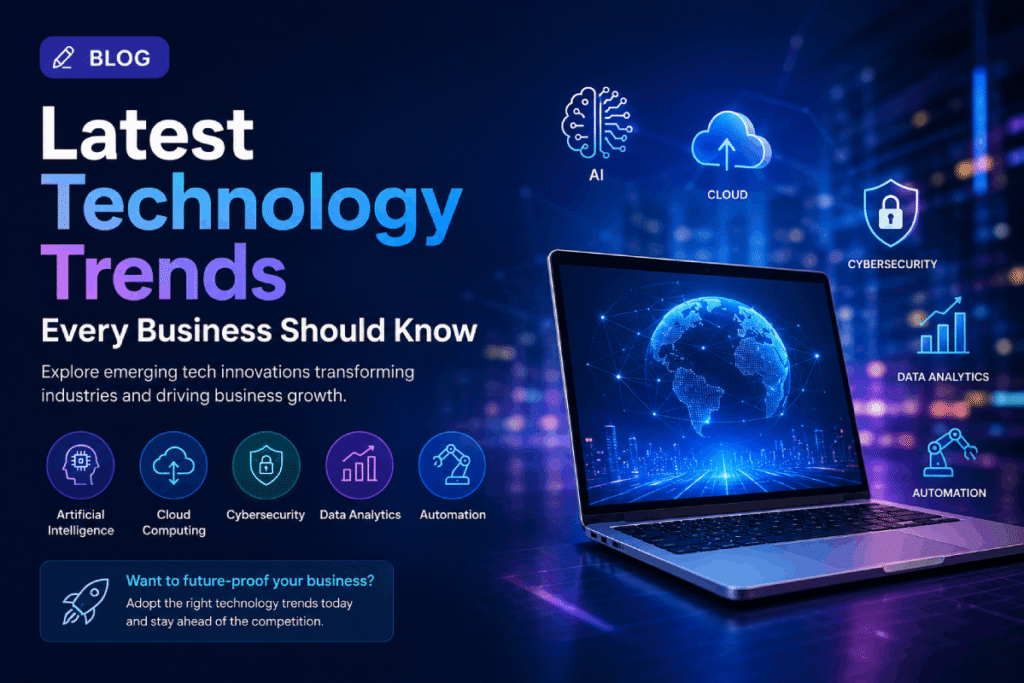
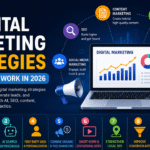
The latest technology trends every business should know include agentic AI, generative AI, intelligent automation, cybersecurity resilience, cloud modernization, data analytics, edge computing, low-code development, sustainable technology, quantum readiness, and immersive digital experiences.
These trends matter because they help businesses reduce manual work, improve customer experience, protect sensitive data, make faster decisions, and stay competitive in a fast-changing digital market.
Whether you run a small business, startup, enterprise, local service company, SaaS brand, or eCommerce store, understanding these technology trends can help you make smarter investment decisions.
Why Technology Trends Matter for Businesses
Technology is no longer just an IT department concern. It now affects sales, marketing, customer service, operations, finance, hiring, security, and long-term business growth.
Businesses that adopt the right technology can:
- Automate repetitive tasks
- Improve customer communication
- Make data-backed decisions
- Reduce operational costs
- Strengthen cybersecurity
- Launch products faster
- Improve employee productivity
- Create better digital experiences
However, not every trend is worth adopting immediately. The best approach is to understand which technologies match your business goals, budget, customer needs, and operational challenges.
Top Latest Technology Trends Every Business Should Know
1. Agentic AI and Intelligent Automation
Agentic AI is one of the most important latest technology trends for businesses. Unlike basic chatbots that only respond to questions, agentic AI systems can plan tasks, use tools, make decisions, and complete multi-step workflows with limited human involvement.
For example, an AI agent can help a sales team by researching leads, drafting outreach emails, updating CRM records, scheduling meetings, and preparing follow-up reminders.
Business Use Cases
- Customer support automation
- Sales lead qualification
- HR onboarding workflows
- IT helpdesk support
- Finance report generation
- Marketing campaign planning
- Internal knowledge management
Actionable Tip
Start with low-risk workflows. For example, use AI agents for drafting, summarizing, reporting, or routing tasks before allowing them to perform sensitive actions such as approving payments or changing customer records.
2. Generative AI for Business Productivity
Generative AI continues to transform how businesses create content, analyze information, and support teams. It can generate text, images, reports, code, summaries, emails, presentations, product descriptions, and customer support responses.
For businesses, generative AI is valuable because it saves time and improves productivity across departments.
Practical Examples
A marketing team can use generative AI to create blog outlines, ad copy, social media captions, and email newsletters.
A customer support team can use it to summarize long conversations and suggest accurate replies.
A software team can use it to generate code snippets, documentation, and test cases.
Actionable Tip
Create clear AI usage guidelines for your team. Define what AI can be used for, what requires human review, and what data should never be entered into AI tools.
3. Cybersecurity Resilience and AI Security
As businesses use more AI tools, cloud platforms, and digital systems, cybersecurity becomes even more important. Modern cybersecurity is shifting from only preventing attacks to building resilience.
Cybersecurity resilience means your business can detect, respond to, recover from, and learn from security incidents.
Key Areas to Focus On
- Multi-factor authentication
- Passwordless login
- Zero trust security
- AI risk monitoring
- Cloud security
- Data backup and disaster recovery
- Employee phishing awareness
- Identity and access management
Why It Matters
AI can help businesses detect threats faster, but attackers can also use AI to create more convincing phishing emails, automate attacks, and find system weaknesses.
Actionable Tip
Audit your current tools, user access, and data storage. Remove unnecessary permissions and make sure critical business data is backed up securely.
4. Cloud Modernization and Hybrid Cloud
Cloud computing is not new, but cloud modernization is still one of the most important technology trends for businesses.
Many companies now use hybrid cloud models, combining public cloud, private cloud, and on-premise systems. This gives businesses more flexibility, scalability, and control.
Business Benefits
- Faster software deployment
- Lower infrastructure burden
- Better remote work support
- Easier data storage
- Improved disaster recovery
- Scalable business applications
Example
An eCommerce business can use cloud hosting to handle traffic spikes during festival sales, product launches, or promotional campaigns.
Actionable Tip
Avoid moving everything to the cloud without a plan. First identify which applications need better speed, security, scalability, or cost optimization.
5. Data-Driven Decision Making
Data is one of the most valuable assets for modern businesses. With analytics tools, dashboards, and AI-powered insights, companies can make faster and more accurate decisions.
Data-driven businesses use information from sales, customers, website traffic, marketing campaigns, inventory, and operations to improve performance.
Examples of Business Data
- Customer purchase behavior
- Website conversion rates
- Marketing ROI
- Product demand
- Customer support issues
- Employee productivity
- Inventory movement
Actionable Tip
Start with a simple dashboard that tracks your most important business metrics. For example, a local service business may track leads, calls, bookings, customer reviews, and repeat customers.
6. Edge Computing and Internet of Things
Edge computing means processing data closer to where it is created instead of sending everything to a central cloud server. This is useful when businesses need faster response times.
The Internet of Things, or IoT, connects physical devices to the internet. These devices can collect and share data.
Business Use Cases
- Smart factories
- Logistics tracking
- Retail inventory monitoring
- Healthcare devices
- Smart offices
- Fleet management
- Energy monitoring
Example
A logistics company can use IoT sensors to track vehicle location, temperature, fuel usage, and delivery status in real time.
Actionable Tip
Use IoT and edge computing where real-time monitoring can reduce cost, prevent downtime, or improve customer service.